
Goat Cheese Exposed: From Farm to Table? More Like Covered in Pus
After a concerned whistleblower who worked at Grand Barr Dairy—an Oregon farm that uses approximately 250 goats for milk—contacted PETA to report animals confined in filth, emaciated, deprived of veterinary care for pneumonia and other infections, suffering from painfully overgrown hooves, and dying in large numbers, we took a firsthand look at this severe and rampant neglect. PETA’s undercover investigation into the dairy—which at the time supplied milk to Laura Chenel, a cheesemaker that claims to source milk from “happy” goats—documented all these horrors and more.
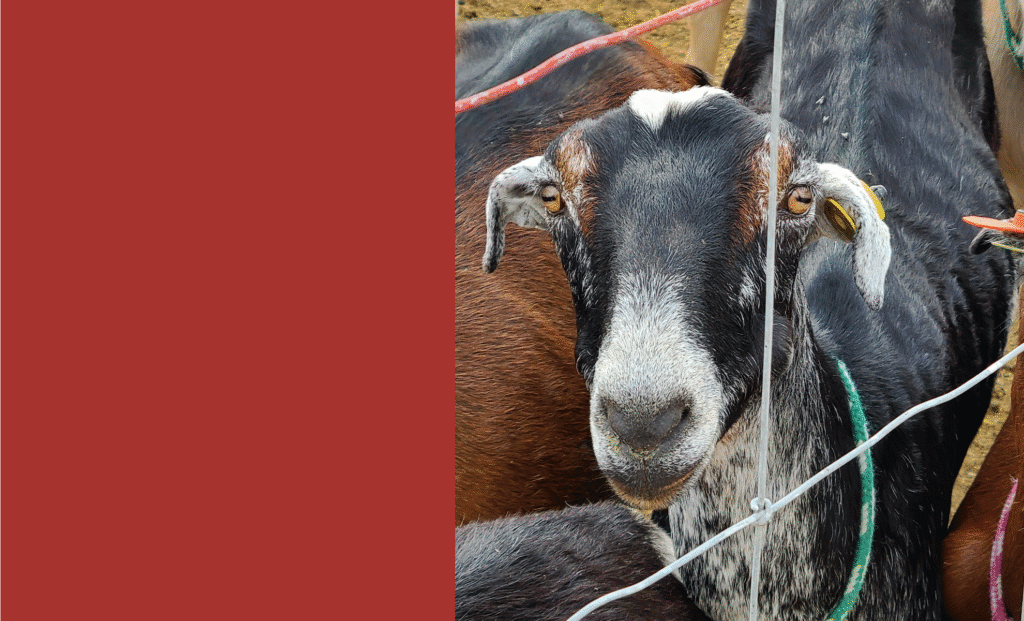
Update (July 23, 2026): How PETA Helped More Than 230 Goats Escape a Cruel Dairy Farm
The last 97 survivors rescued from Grand Barr Dairy have reached safety! The rescued goats arrived at The Humane Farming Association’s Suwanna Ranch in California, where they’ll spend the rest of their lives grazing in open pastures, forging friendships, and receiving the care the dairy operation denied them for so long. Their arrival marks a victorious conclusion for the more than 230 goats seized from the Oregon dairy following PETA’s undercover investigations (detailed below).
In February, the operators of the dairy, Taunia Barr and Aaron Barr, were indicted by a Malheur County grand jury on 478 charges of felony animal neglect—each punishable by up to five years in jail and a $125,000 fine.

Chronic, Crippling Neglect
Unable to walk on her front legs, a goat named Tina could only crawl on her knees. A dairy co-owner claimed that one of Tina’s legs, which jutted out awkwardly to the side when she lay down, had “always been crooked.” The other co-owner admitted that Tina was in pain and should be put down but left the crippled goat to suffer in a small, waste-filled pen that went uncleaned for more than a month. As Tina struggled to stand, she slipped and stumbled face-first into urine-soaked hay and accumulated feces.
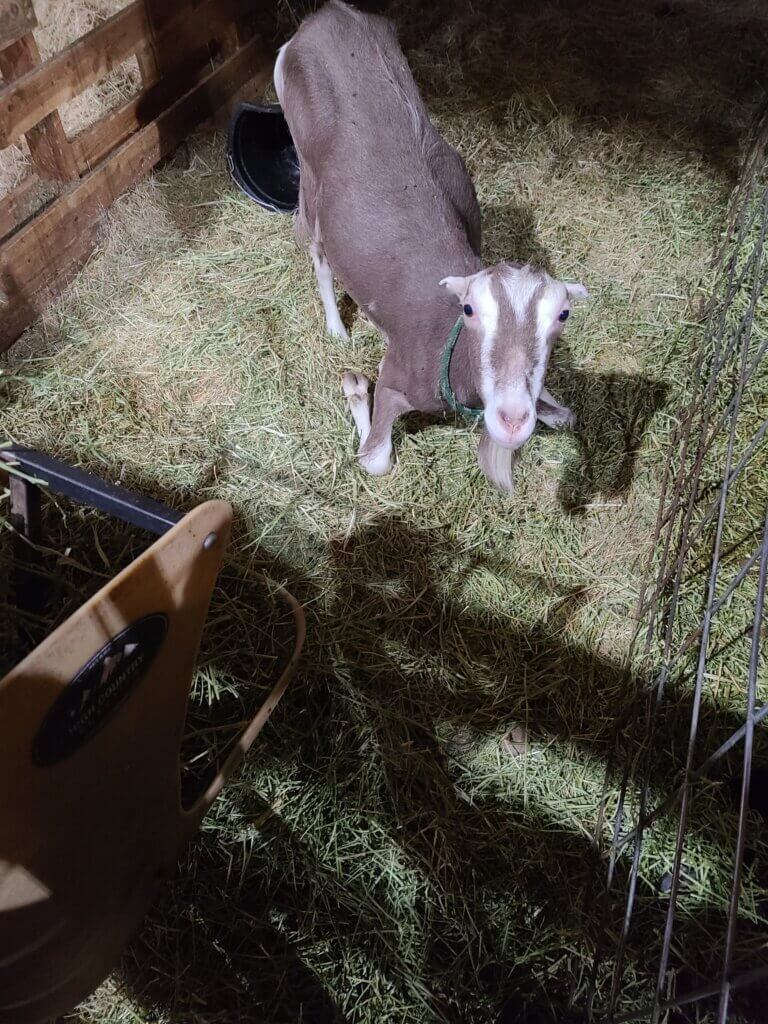
Another goat—whom the investigator named Dahlia—walked slowly and stiffly, with a bowlegged gait, lifting her right front leg unusually high. As her lameness progressed, she began resting on her knees whenever possible—even on a concrete floor—because standing on her front legs was too painful. When the investigator pointed out Dahlia’s worsening limp, the dairy co-owner simply said, “She steps funny. She’s always been like that.”
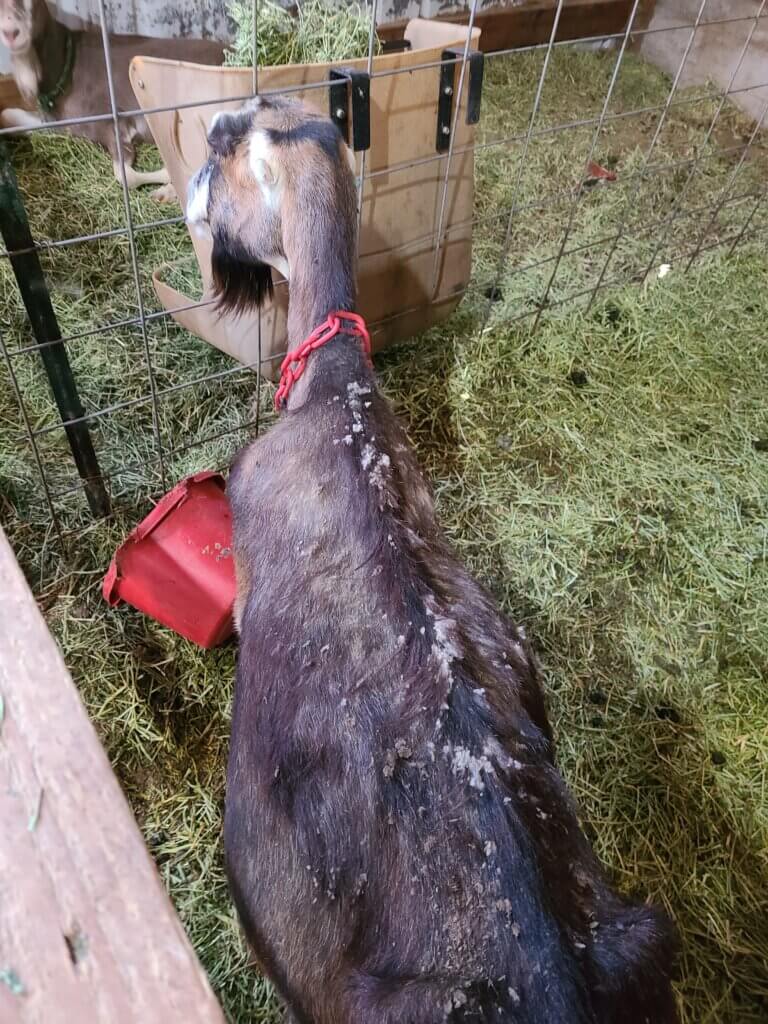
Many of the approximately 250 goats at the dairy had severely overgrown hooves. Some limped or walked gingerly in pain. Overgrown hooves make walking difficult and can lead to painful conditions such as arthritis, abscesses, foot scald (a type of dermatitis), and a painful bacterial infection known as foot rot.
“The degree of overgrowth of these hooves is almost certainly causing many of the animals pain and suffering. … This will lead to constant abnormal pressures on the hoof and limbs and result in pain and suffering over the lifetime of the animal, even if appropriate foot care is instituted from this point on”
– Dr. Mason Payne, a veterinarian who reviewed the footage

Left to Suffer Because the Vet ‘Costs Money’
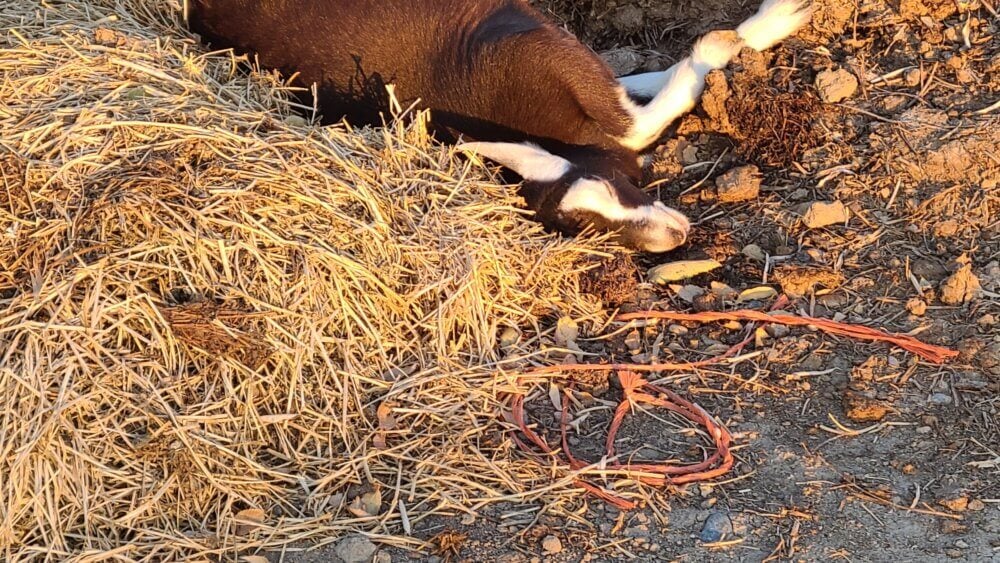
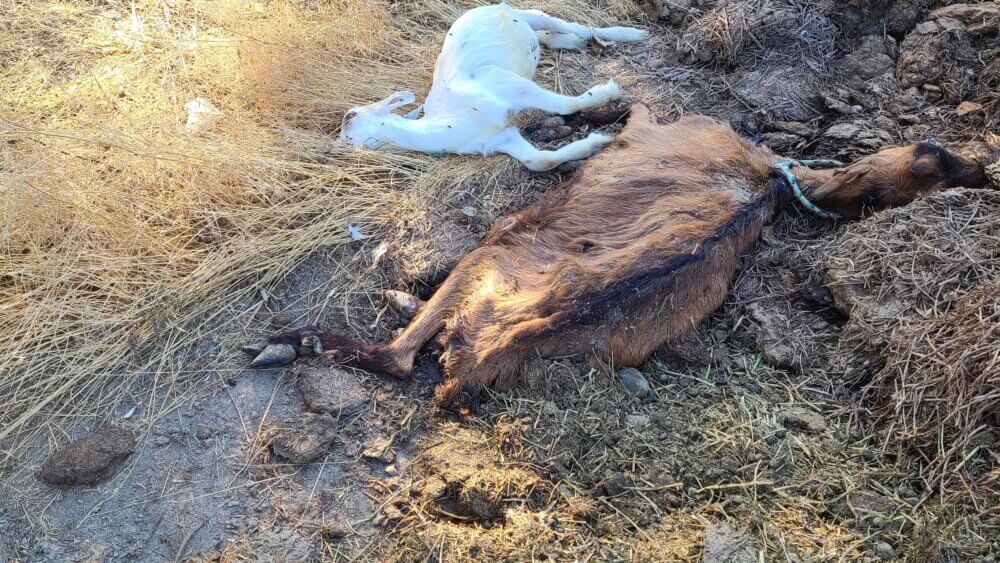
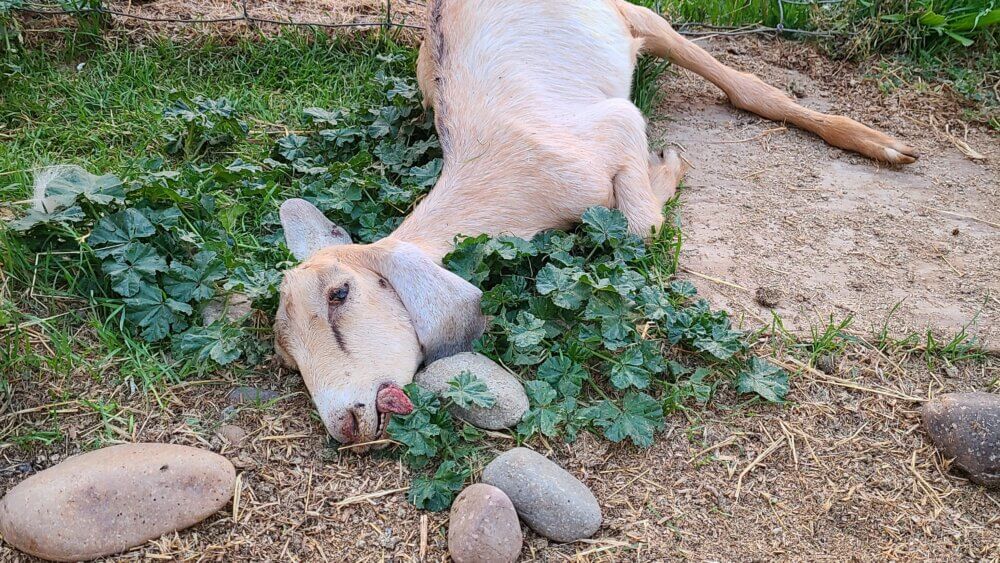
A doe the investigator named Carrie was so weak she couldn’t stand. A worker explained that the co-owners wouldn’t call a veterinarian for sick animals but would “just let [illness] run its course.” At the suggestion that Carrie might die, the workers simply shrugged. The investigator alerted a co-owner that Carrie was sick, but the co-owner sought her no veterinary care and left her to die. Her body was tossed on a pile of dirt and other goat remains to rot.
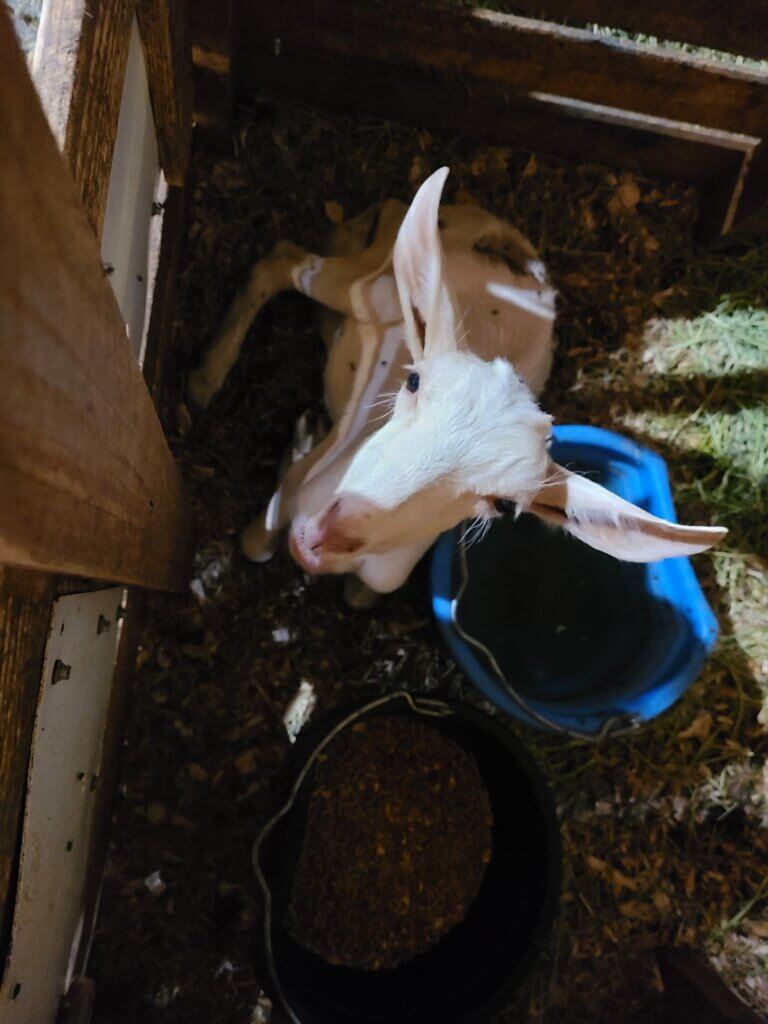
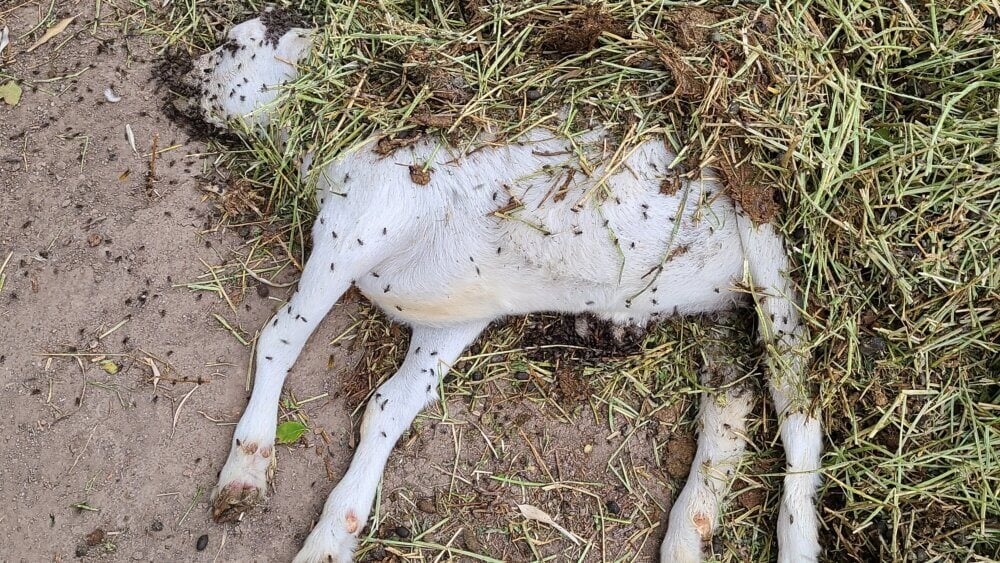
Goats are playful and curious animals who love to climb and are known to wag their tails and jump for joy. A young goat named Annie should have been doing just that, but instead she was listless, lethargic, and unsteady on her feet. Her hindquarters were stained with feces, she was covered in flies, and she was so thin that her ribs and spine were easily visible. A co-owner attributed Annie’s condition to eating dog food and sought no veterinary care for her for over a month because it “costs money.”
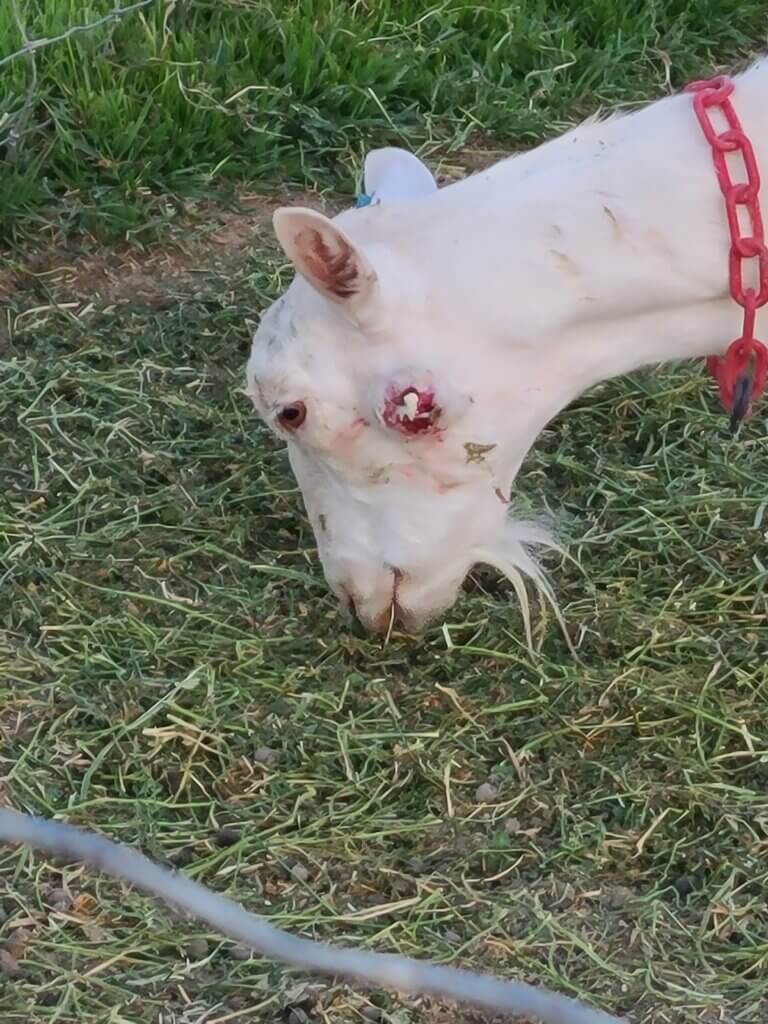
A co-owner said that “every goat” had the highly contagious bacterial infection caseous lymphadenitis, which causes abscesses and, in severe cases, chronic wasting. The co-owner said that she sometimes lanced the abscesses but that it was “better to let [them] burst.” A goat the investigator named Judy had an abscess that caused the side of her face to swell. When she became reluctant to eat, the co-owner admitted that chewing probably caused Judy pain, but she did nothing for her. Other goats with abscesses included Carly and Natalie, who were emaciated, and Shannon, whose abscess was allowed to burst. Even though the pus in such abscesses is extremely contagious, the co-owner said they would not be cleaned.
Although rare, caseous lymphadenitis can also be transmitted to humans through contaminated milk—causing inflamed and abscessed lymph nodes—but goats with the abscesses were still milked.
The Kids Are Not All Right
Goats are social animals who form meaningful relationships and strong bonds with each other, and researchers have found that mother goats recognize their kids’ unique cries long after being separated from them. But at this dairy, like on any other, goat kids were taken from their mothers immediately after birth so that the milk meant for the growing babies could be sold and made into cheese.
Five kids—a full third of the kids the investigator saw on the farm—died in just weeks.
A kid the investigator named Charlie was found with diarrhea. He was also panting, drooling, not eating or drinking, and in obvious distress. A co-owner said that Charlie had “probably been eating dog food” and denied him care. He died that day. Dog food was not removed from the pens where kids were kept until after another death and one sickness were attributed to it, but a co-owner left kibble in a pen confining young adult goats.
Two coughing kids also died without care. One kid’s cough lingered for a month, and the co-owner said the other kid, who also had diarrhea, had died of pneumonia. Like the adult goats who died, their remains were tossed in a pile, and the co-owners didn’t even bother to clean the filthy pens where they’d been housed in groups—which may have contributed to the spread of illness.
Pain From All Directions
The co-owners used a hot iron to burn sensitive horn tissue—without pain relief—off 4- to 6-week-old kids, long after their horn buds would have begun to fuse to the skull, rendering the mutilation not only excruciating but also likely ineffective. Dr. Clive Phillips—an expert in livestock production, medicine, and behavior and former chair of animal welfare at the University of Queensland—wrote, “To disbud at this age without anaesthesia or analgesia is cruel. … [A] wide range of measures have shown that [disbudded] kids experience pain, and as it is prolonged, it can be concluded that they are suffering.”
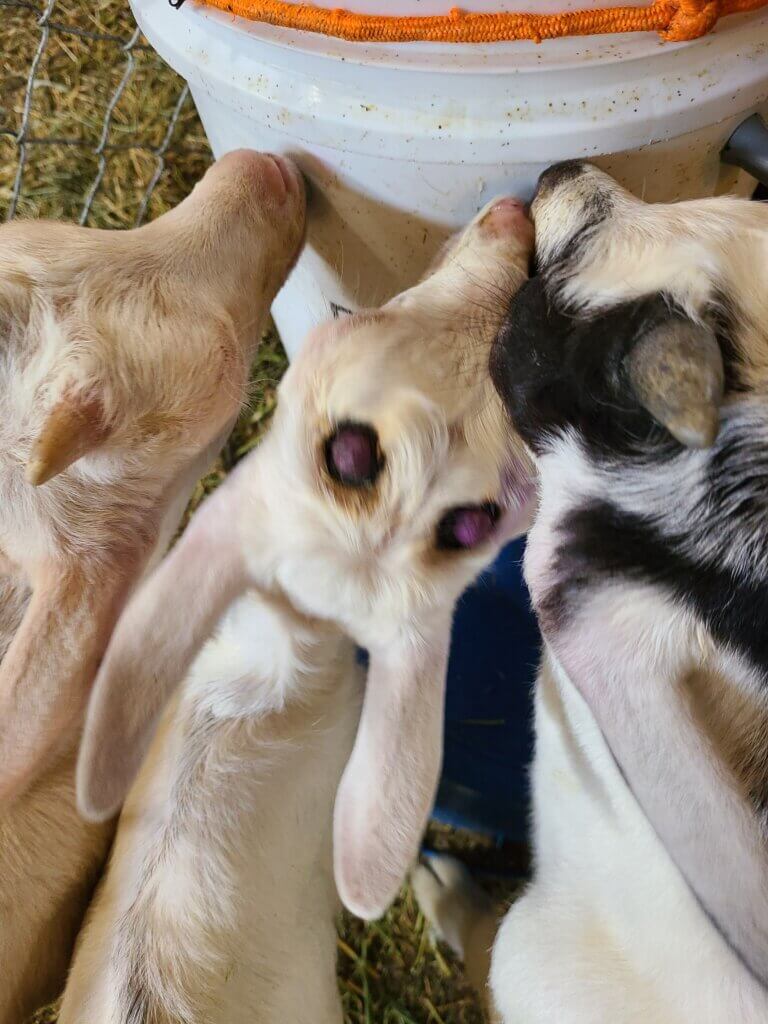
A co-owner castrated goat kids—also without pain relief—by putting tight bands around their scrotums. This method cuts off blood flow to the testicles, causing the tissue to die slowly and painfully. Dr. Payne wrote, “[P]ain control is necessary with any castration method. … I personally consider [banding] one of the most painful methods of castration, as the pain … continues to some degree for days or weeks as the tissue becomes necrotic and falls off.”
On top of chronic illness, deprivation, and denial of pain relief, the goats also endured physical abuse from the dairy owners and staff. The dairy co-owners punched and slapped goats and pulled their tails. A worker kicked goats, struck others with branches, and poked one lactating doe in her swollen, sensitive udder repeatedly—apparently for her own entertainment.
Bare Necessities Denied
Sick and underweight goats—including several who had a skin condition that a co-owner said was caused by lice—were kept amid their feces and urine in pens that went uncleaned for at least a month. A worker admitted that the skin issues occurred when goats were kept in “poor conditions” and said that the co-owners wouldn’t buy fresh wood shavings to change out the pens. PETA’s investigator repeatedly offered to clean the pens but was consistently assigned other tasks instead—like cleaning the money-making milking system.
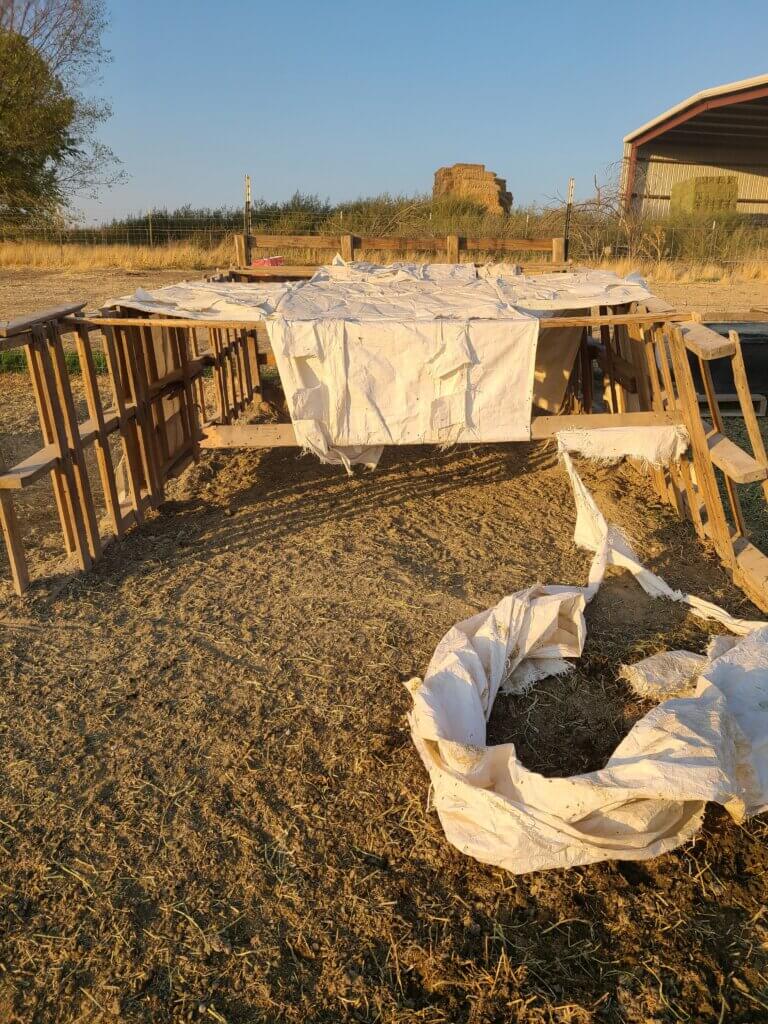
Many goats had only torn tarps over a dilapidated wooden frame as their wholly inadequate “shelter.” More than 60 goats had no shelter or shade at all. During thunderstorms, they cried out in the rain, and on hot days, they panted in the sun and repeatedly ran out of water, drinking eagerly when the investigator provided it.
Smaller goats couldn’t drink when the water levels in deep tubs fell. One water tub went uncleaned for more than a month and developed a thick layer of dirt and algae. The dairy co-owners instructed the investigator to give the goats less hay, even though many of them were underweight, with protruding spines, ribs, and hips. Hungry goats were forced to compete for access to meager amounts of hay.

Smaller Farm, Same Failures
All this misery took place on a “family” farm, and one of Grand Barr Dairy’s co-owners described it as the smallest such dairy in the heavily agricultural area. But conditions there prove that pervasive neglect and abuse aren’t exclusive to factory farms that confine tens of thousands of individuals. Animals used by family-operated farms like Grand Barr Dairy suffer all the same.
At the time of PETA’s investigation, Grand Barr Dairy supplied milk to California-based cheesemaker Laura Chenel. Laura Chenel claims to source milk from farms that “put their goats first” and are “committed to raising happy goats and maintaining the highest standards of care.” After hearing from PETA, Laura Chenel terminated its relationship with Grand Barr.
At this dairy, like all others, profitability comes first, and “happy” goats are pure fiction—sickness, pain, and death are these animals’ reality. Smaller farms don’t mean higher animal welfare standards—only a higher price point for their humane-washed products.
Months Later, Nothing Changed
Update (December 23, 2025): Just days after we submitted our investigator’s evidence of widespread neglect and abuse at Grand Barr Dairy to the Malheur County Sheriff’s Department, a second PETA investigator began working at the dairy, as reported by the Idaho Statesman. For two months, the new investigator documented that nothing changed—even after the sheriff’s office cited one of the farm owners for neglect.
Tina—whom workers called “Kickstand,” apparently mocking her pain and disability—still couldn’t walk and was left to suffer and crawl in filth, despite the owner’s admission that she “should just put [Tina] down.” Dahlia still limped in pain, apparently due to severe arthritis, for which the owners provided her with no pain relief. The owners still denied veterinary care to emaciated goats, claiming that the animals were “just old” and that goats used for milk are “meant to [be] thin.” Goats with painful abscesses caused by an untreated, contagious bacterial infection were still milked, and sick and underweight goats were still kept amid their feces and urine in pens that went uncleaned for weeks on end.
PETA has submitted this additional evidence of chronic neglect to the sheriff’s office and prosecutors, and we’re urging them to take action for these suffering animals at long last, to file felony and misdemeanor animal abuse and neglect charges against Grand Barr’s owners, and to secure the removal of and care for every goat from the farm.
Pledge to Be Vegan
The only way to ensure that your next charcuterie board is truly humane is to go vegan. Please avoid products made from any animals’ milk and choose from the delicious variety of dairy-free options available today—including creamy, spreadable vegan goat cheese.
If you think you have what it takes to conduct undercover investigations, we want to hear from you.