
The Deadly World of Underground Horse Races
Update (January 8, 2026): After receiving reams of evidence from PETA of jockey Jose Nicasio riding at deadly unregulated California racetracks, the California Horse Racing Board banned him for life! Read on for all the other updates.
The Latest News: How PETA Is Taking Action for Horses Used in Unregulated Racing
Update (July 14, 2025): Using PETA’s evidence from a year-long investigation, the California Horse Racing Board (CHRB) filed a complaint against jockey Jose Nicasio for violating a CHRB rule prohibiting racing licensees from participating in or being present at any unsanctioned, or “bush track,” race. PETA documented the jockey racing in dozens of bush races and repeatedly using an electric shock device on horses.
Update (October 1, 2024): After a complaint from PETA, a high-stakes raid of Carril Mochomos, an unsanctioned Quarter Horse track in Levelland, Texas, ended with the arrest of 14 individuals in connection with numerous offenses, including engaging in organized criminal activity, money laundering, unlawful racing, illegal gambling activity, and racketeering. Texas state officials found electrical shocking devices, illegal equine and human drugs, and large amounts of currency and seized 135 grams of cocaine as well as numerous gambling devices during the search of the property. Update (May 28, 2024): U.S. Reps. Morgan McGarvey (D-Ky.) and Anthony D’Esposito (R-N.Y.) sent a joint letter to U.S. Attorney General Merrick Garland urging the Department of Justice to renew an investigation into unsanctioned horse racing.
Update (April 29, 2024): A PETA probe uncovered evidence that horses are electroshocked, injected with street drugs, and subjected to other acts of cruelty at the nearly 50 unregulated horse racing tracks—or “bush tracks,” at which illegal gambling and other crimes run rampant—across Texas, prompting the group to dispatch an urgent letter to Gov. Greg Abbott and other state officials calling for an investigation.
Update (February 15, 2024): Although federal officials from multiple agencies failed to act on overwhelming evidence that horses were electroshocked and injected with street drugs at unsanctioned races, PETA responded to the feds’ abandonment by seeking local prosecutions and the enactment of regulations to offer some protection for horses.Prosecutors in Georgia charged six jockeys with cruelty to animals and a bookie with felony commercial gambling based on evidence gathered in PETA’s groundbreaking undercover investigation into unregulated Quarter Horse races at two “bush tracks” in that state.
Update (October 23, 2023): Following a presentation in December 2022 from PETA Senior Vice President Kathy Guillermo, who shared findings from PETA’s undercover investigation into bush tracks with the California Horse Racing Board, a groundbreaking regulation was passed to prevent jockeys, trainers, and owners from participating in or even attending illegal races. With this measure, California became the first state in the nation to ban its licensees from attending unsanctioned Quarter Horse races. (Wyoming then passed a similar measure in 2024.)
Update (April 4, 2023): Following PETA’s investigation, the American Veterinary Medical Association and the American Association of Equine Practitioners announced new policies against unsanctioned horse racing.
Update (September 21, 2022): PETA sent an urgent letter to the chair of the Texas Racing Commission and the racing secretary at Lone Star Park, urging them to revoke José Beltran’s license and those of any other jockeys known to participate in unregulated “bush track” races.
Update (September 1, 2022): After PETA alerted Robeson County, North Carolina, Sheriff Burnis Wilkins that illegal drug use and deaths were likely at Sunday’s unsanctioned horse races at Carril Red Springs, at least two horses used in the races died. Both Trump My Record, the most famous horse on the black market circuit, and Hotstepper were champions at regulated racetracks—Hotstepper won the $1.2 million 2018 All American Derby—before being switched to unregulated racing. In response, PETA fired off a complaint to Wilkins, calling for an investigation into the horses’ deaths.
Update (August 23, 2022): Horse racing teams caught in a damning new PETA exposé doping horses with drugs including cocaine and methamphetamine, using electric shock devices, and whipping animals were scheduled to race in unsanctioned races at Carril Red Springs in Red Springs, North Carolina. PETA sent an urgent letter to Robeson County Sheriff Burnis Wilkins, asking him to investigate the unregulated races.
Update (August 18, 2022): After learning that jockeys would ride at Ruidoso Downs despite being exposed wearing electric shock devices and looking on as horses were injected with drugs, PETA sent a letter to the New Mexico Racing Commission (NMRC) and track General Manager Ethan Linder, urging them to revoke the licenses of any jockeys who participate in unregulated races.
From June 2021 through April 2022, a team of PETA operatives investigated unregulated Quarter Horse racing in Georgia, primarily at the largest Georgia “bush track,” Rancho El Centenario (south of Atlanta). Over 180 of these tracks operate all over the U.S., from California to Delaware, flying largely under the radar.
Fast & Furious
Quarter Horses are the fastest breed at running a quarter-mile or less. These “match races” feature two to six horses competing against each other at breakneck speeds on a straightaway track at distances from 5 to 400 yards. A typical race day involves up to 20 races.
PETA discovered a clandestine underworld of crime and cruelty, where racegoers wager hundreds of thousands of dollars and trainers and jockeys drug, whip, and electroshock horses to try to win at any cost.
Meth and Coke
Investigators were appalled to see race teams injecting horses in the neck shortly before races, often on the racetrack itself. Racers experiment with drug cocktails to rev horses up, mask injuries, and kill pain, in hopes of achieving maximum speed.
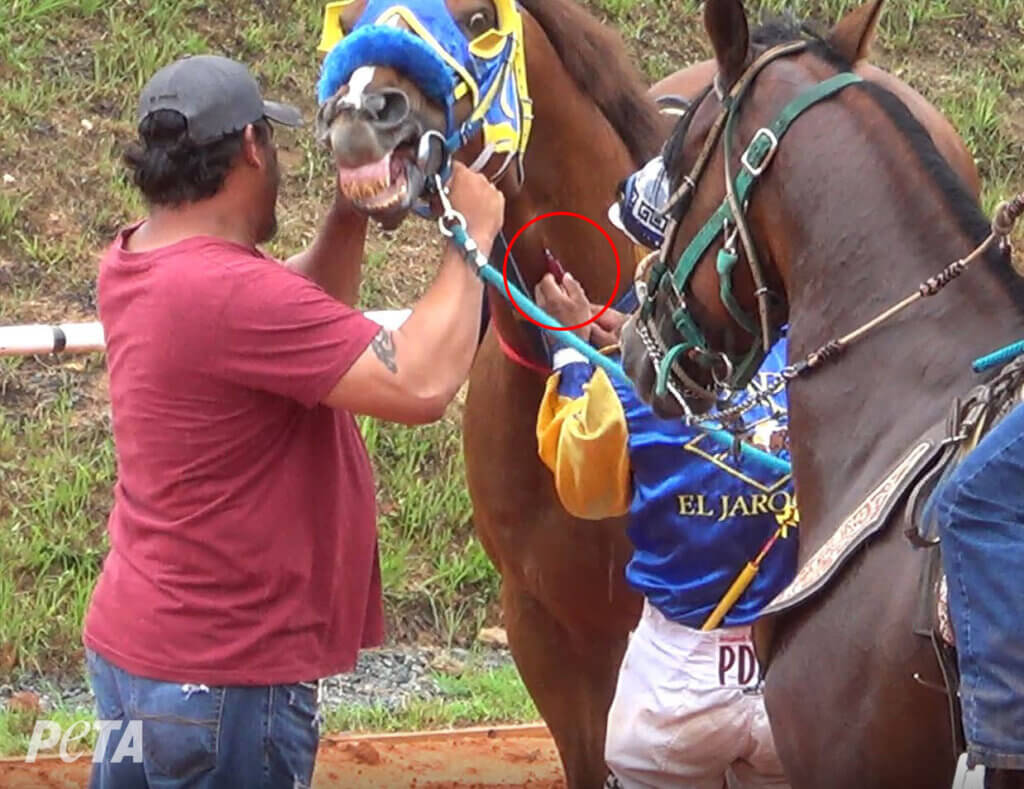
PETA was able to collect 27 syringes and/or needles in total, on six different dates. Testing by a Racing Medication & Testing Consortium–accredited lab revealed that syringes contained cocaine, methamphetamine, methylphenidate (Ritalin), and caffeine, sometimes in combination.
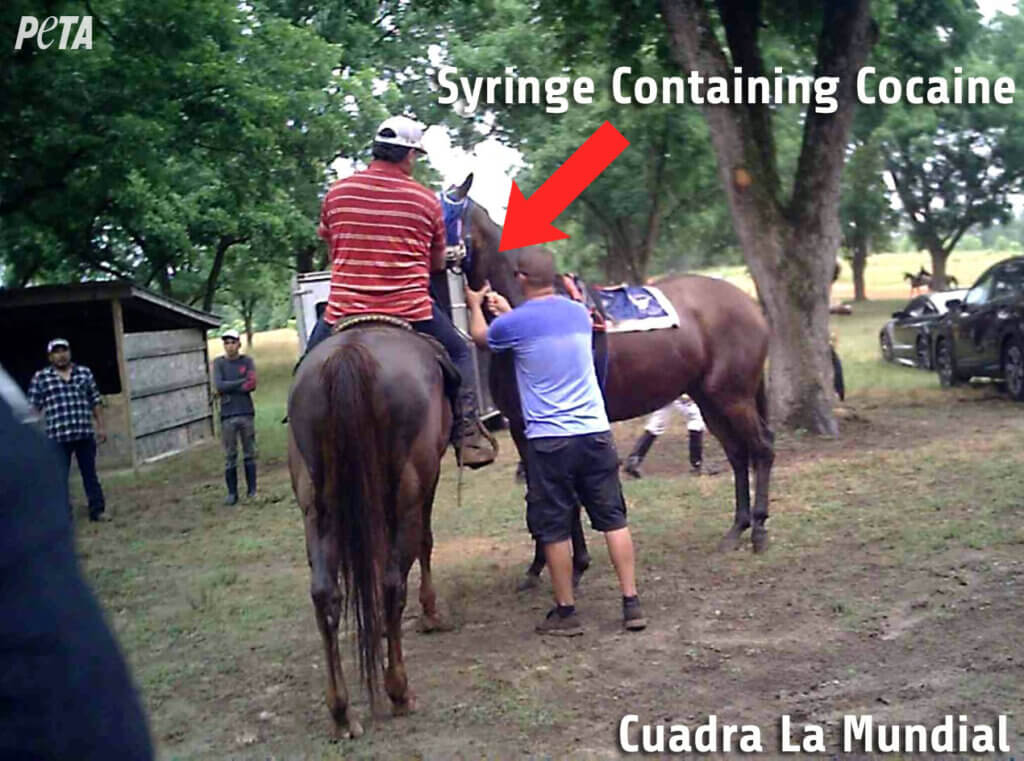
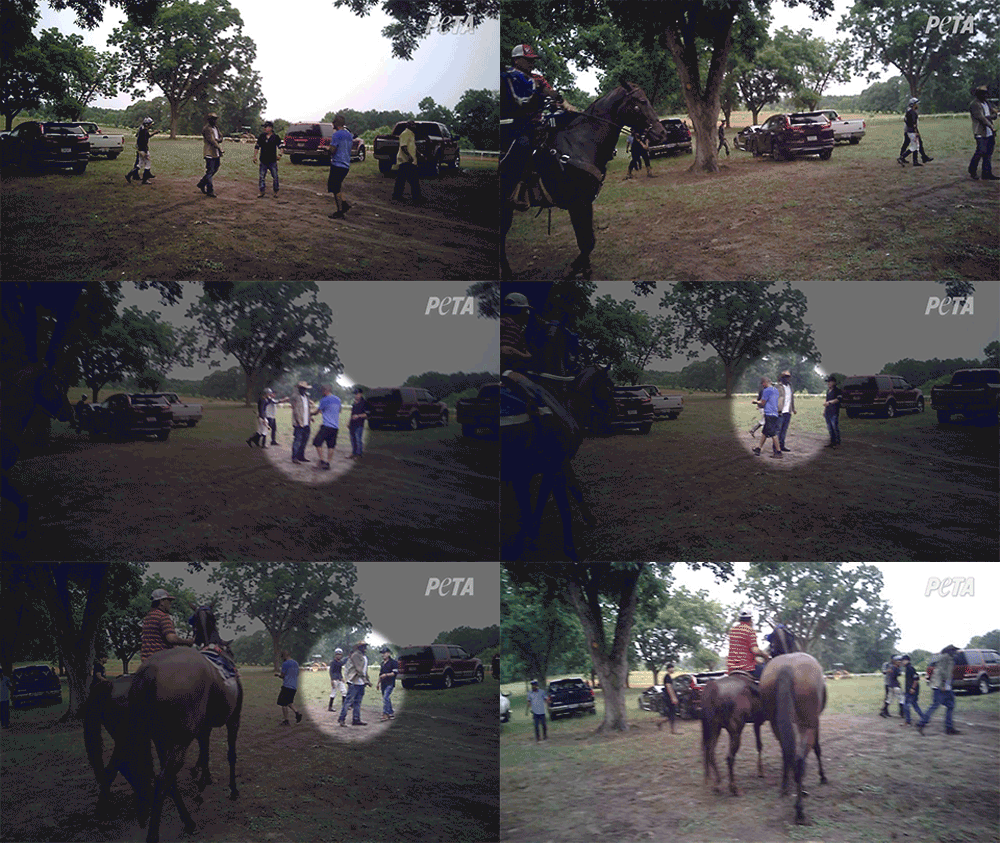
After watching this injection, another trainer jokingly offered his arm for a shot and then shimmied as if he had received a rush from the drug. They all know what’s in these syringes.
Horses Shocked With Electric Devices and Whipped Relentlessly
Jockeys whipped horses relentlessly—often over 20 times in a row—and other team members even struck the horses from behind as the starting gates opened. Jockeys and handlers also whipped and hit horses before races, during loading, and in the starting gates, as punishment and/or to control fractious behavior in the drugged-up horses.
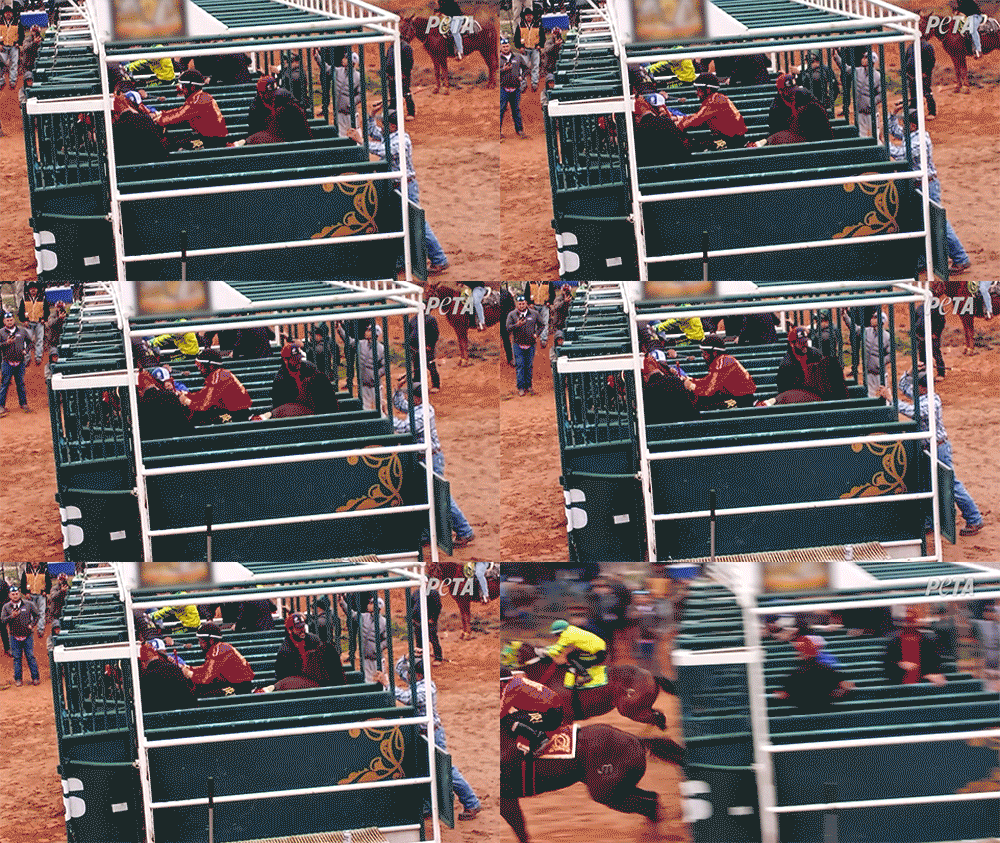
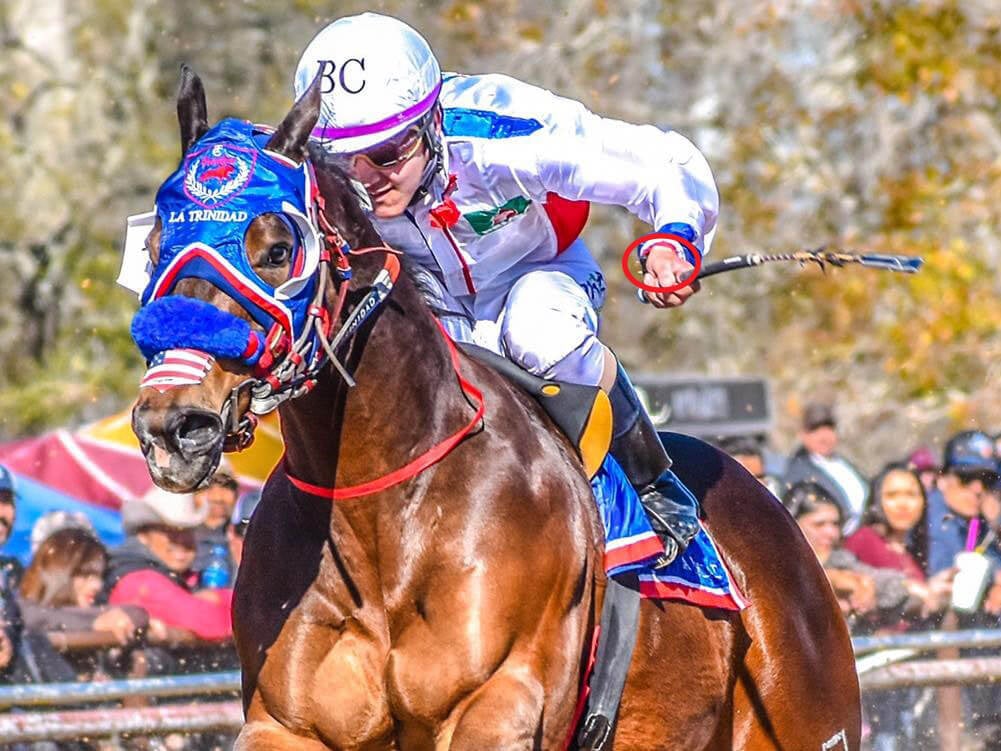
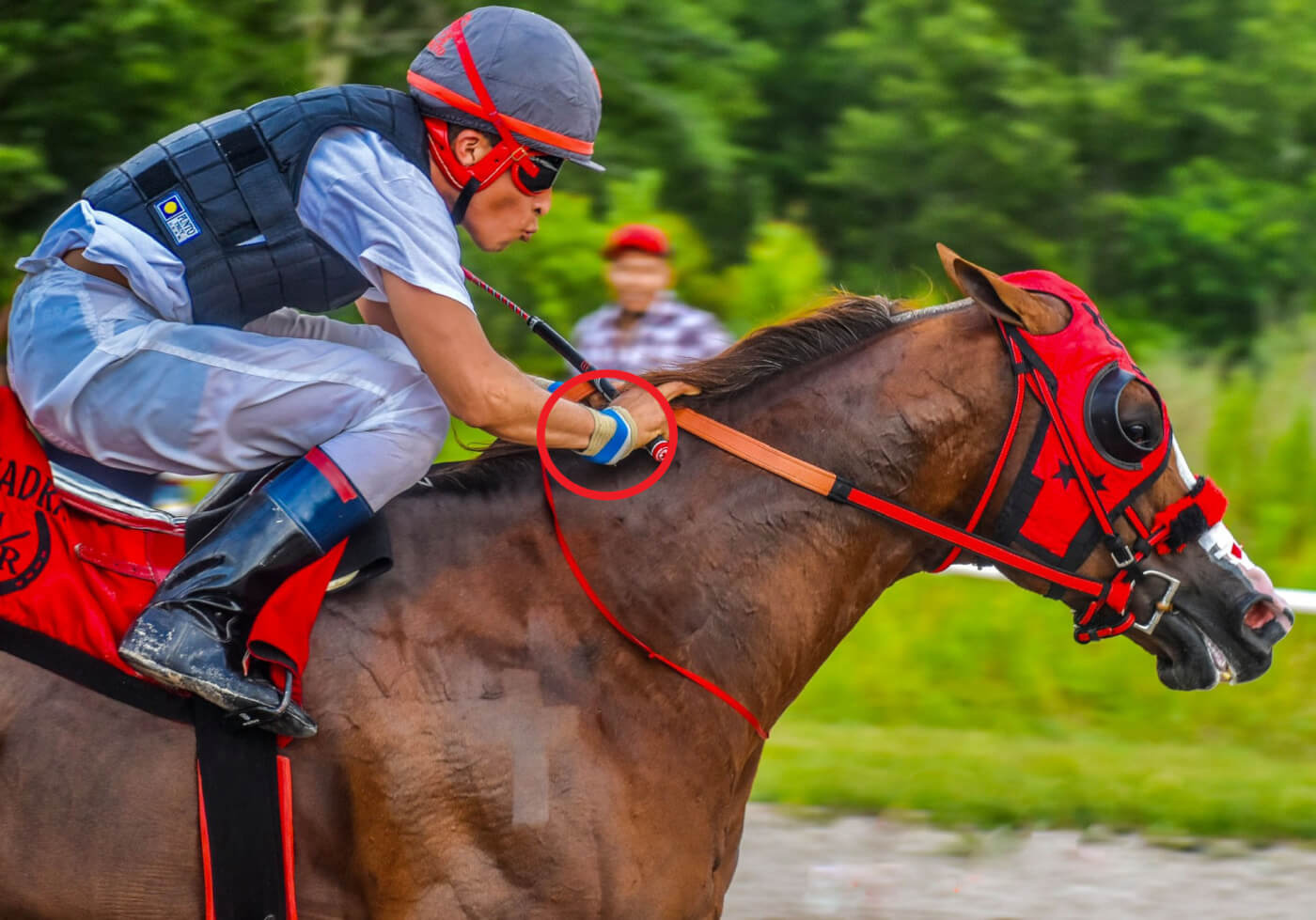
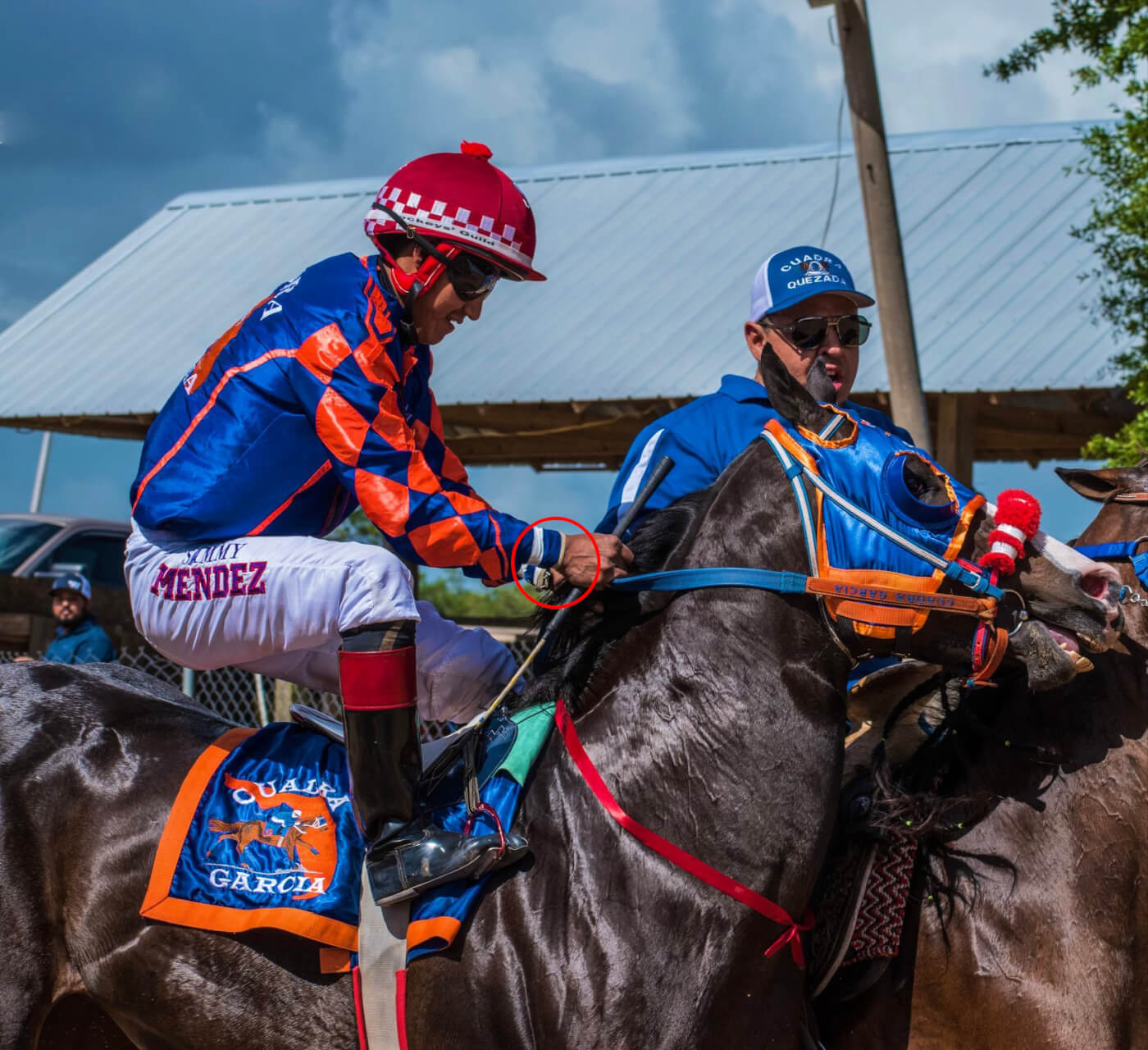
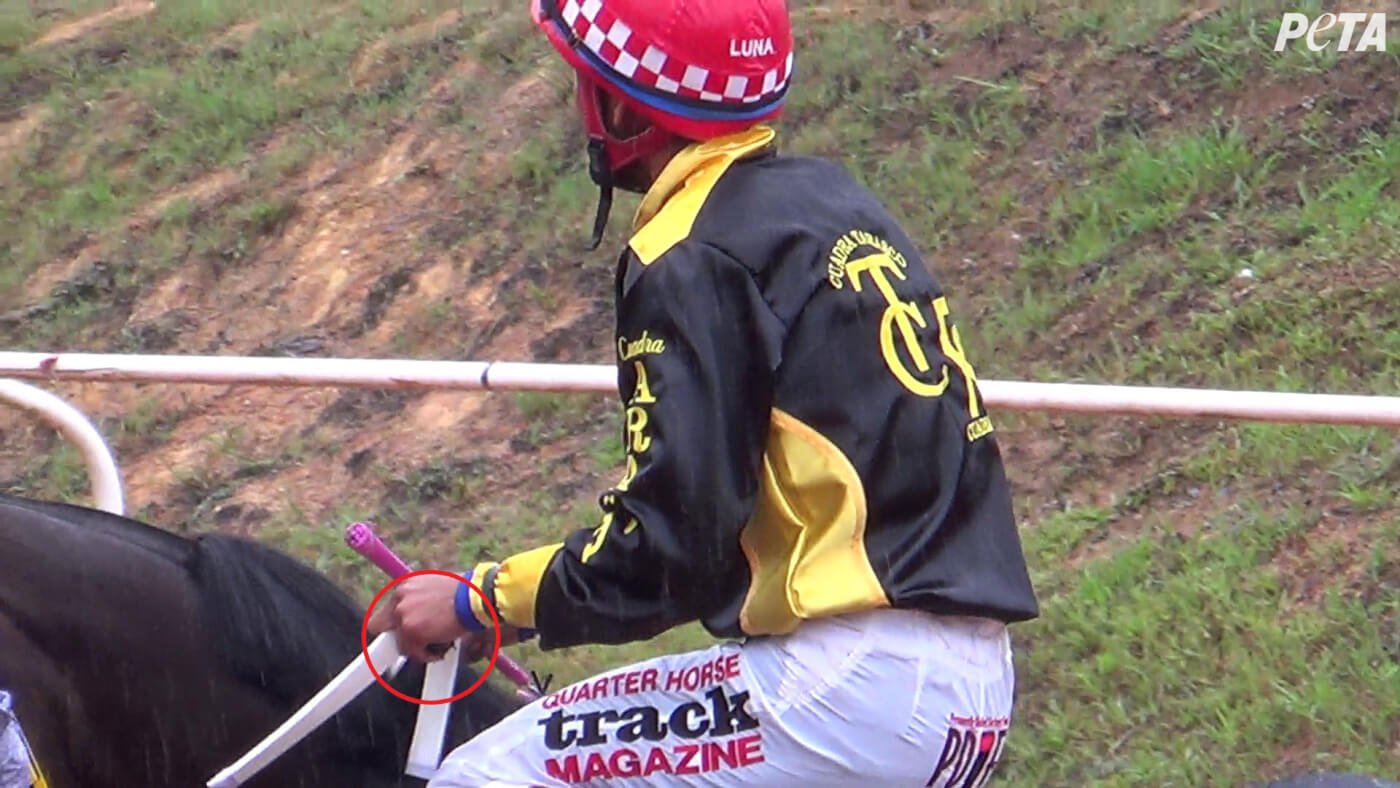
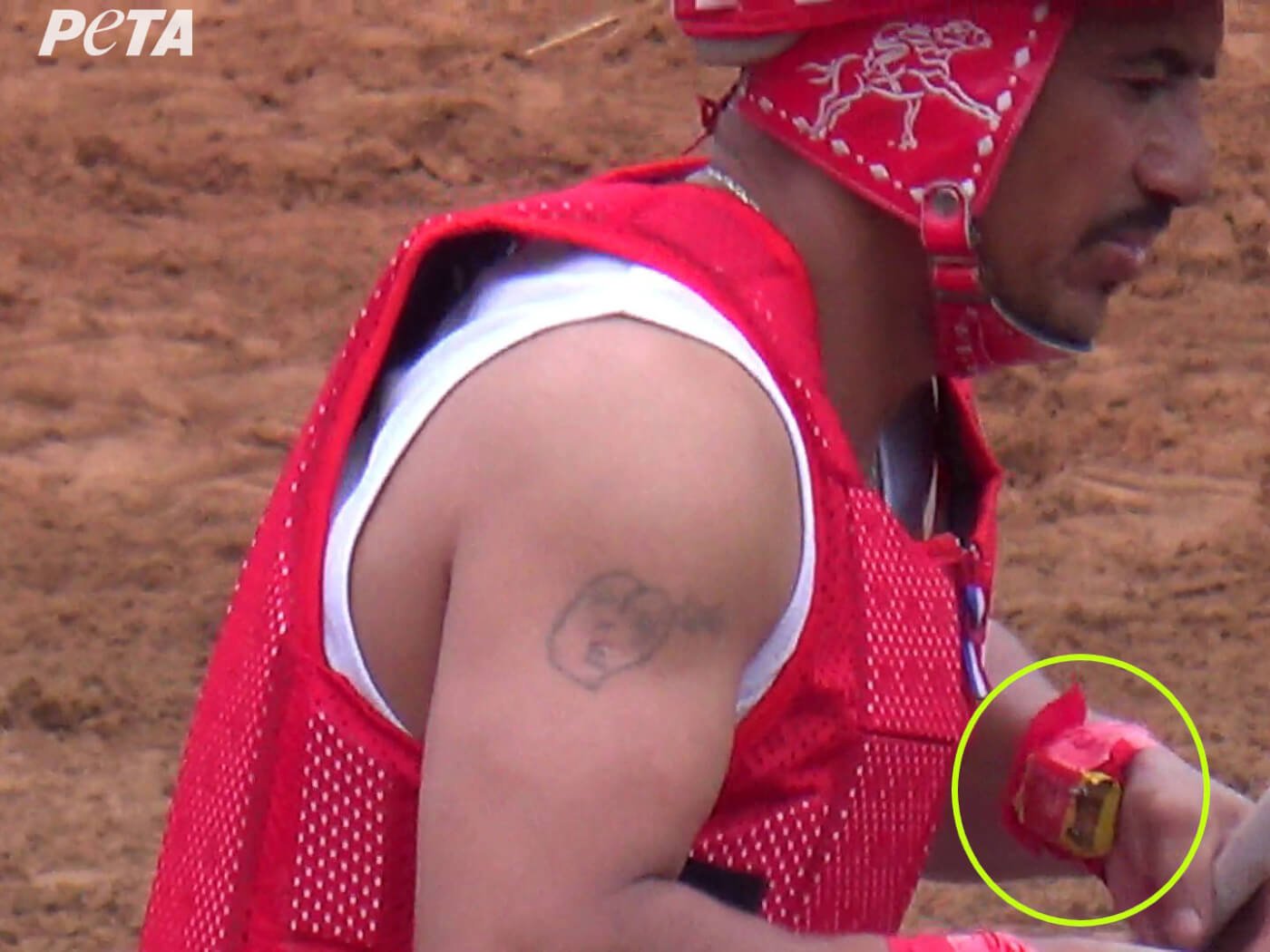
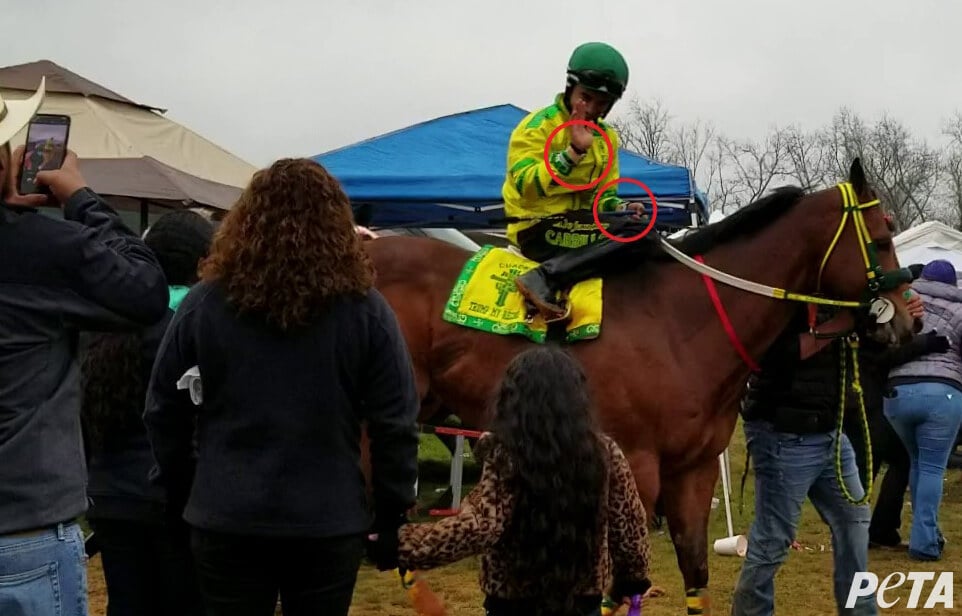
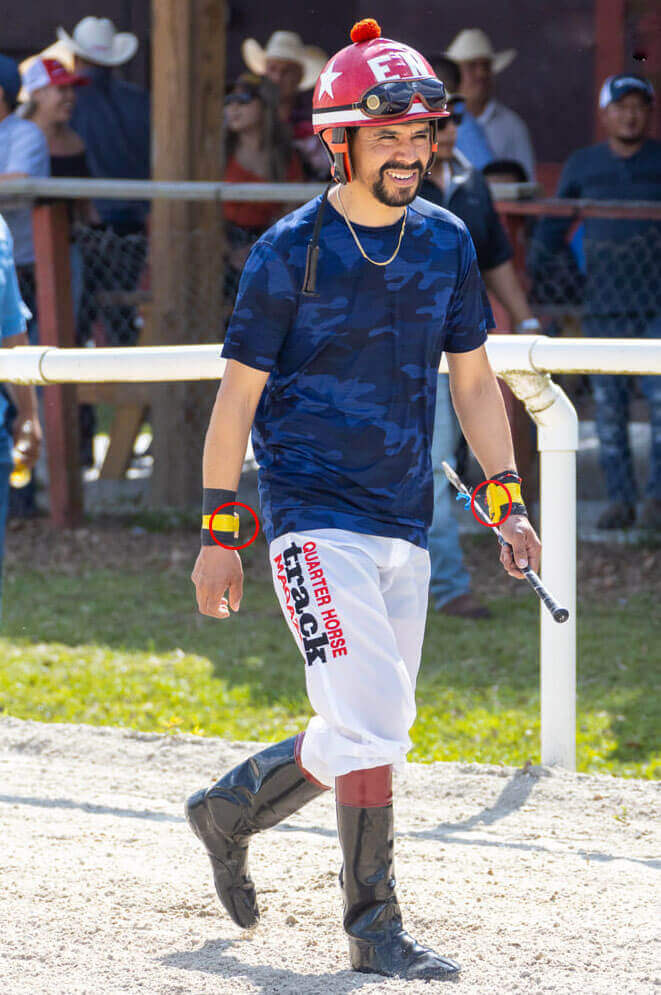
Jockeys did not limit themselves to whipping—investigators’ close-up footage revealed electric shock devices (aka “batteries,” “buzzers,” “machines,” “chicharras,” or “máquinas”) held in jockeys’ hands or taped to their wrists. They use them to shock the horses in the neck during races, even the many jockeys who also race at mainstream tracks, where using or possessing these devices would result in a multiyear suspension.
Jockeys Risking Their Own Lives and Limbs
When horses suffer catastrophic breakdowns in races, the jockeys are often badly injured in the falls.
In an incident at Rancho El Centenario in 2021, notorious jockey Roman Chapa (who had been banned from mainstream tracks after he was photographed holding a shocking device) rode a horse who fell and was fatally injured; Chapa later died from his own severe injuries.
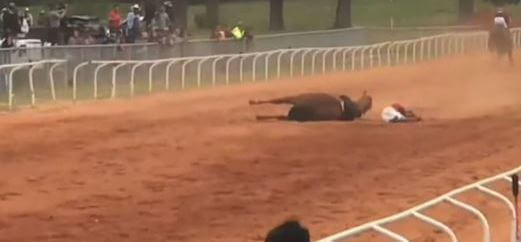
The track announcer and security guards tell attendees to stop filming after these gruesome breakdowns, but some videos make it online, and PETA investigators have scrupulously filmed in person and collected numerous other videos of injuries and deaths at Rancho El Centenario.
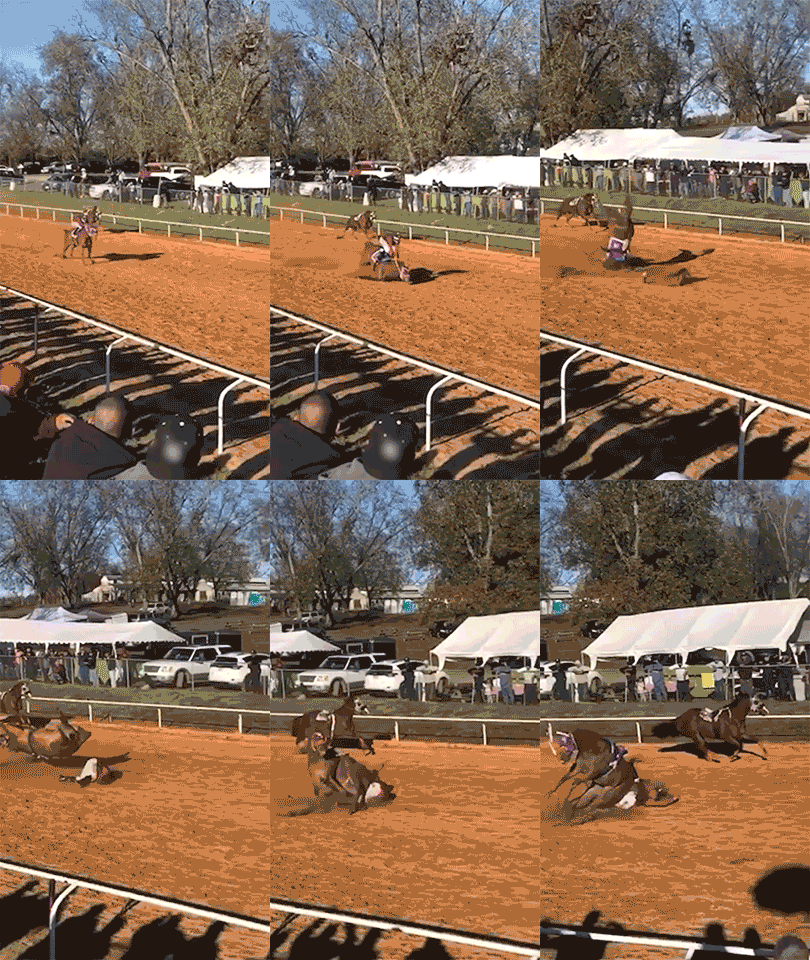
Osdany Leal sustained grave spinal injuries in this fall, and horse La Diosa was killed. Jockeys, who are complicit in overdriving the horses, choose to take these dangerous risks, but the horses don’t have a choice.
PETA also identified underage jockeys who were only 13 and 14 when racing at these Georgia tracks.
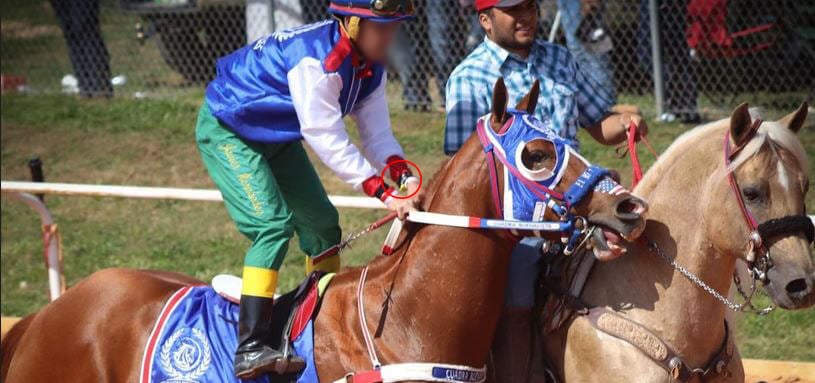
These crime-ridden underground racetracks are the dark underbelly of the wider Quarter Horse racing industry, which profits from breeding and selling these horses and then looks the other way.
High-Stakes Gambling
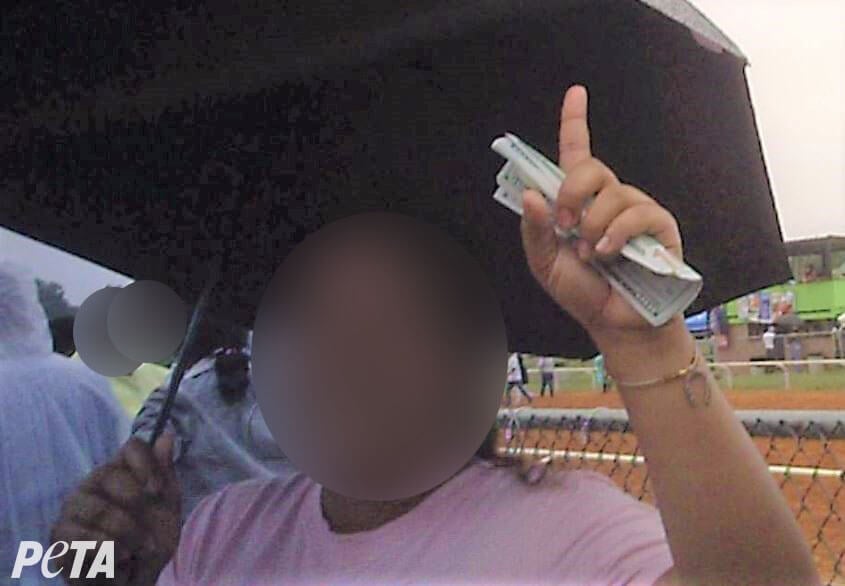
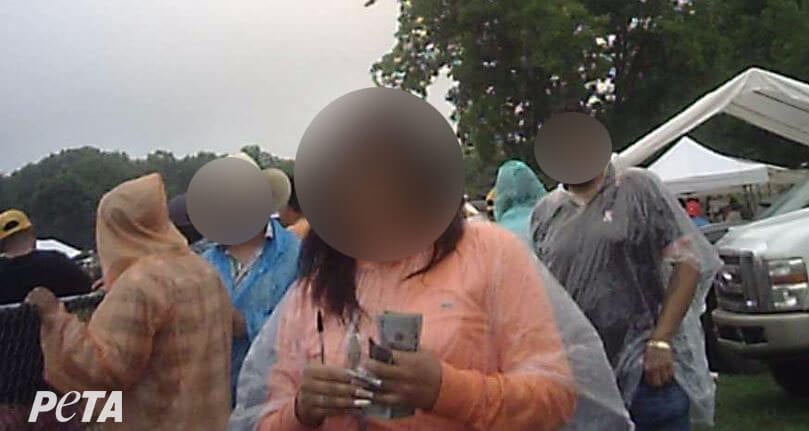
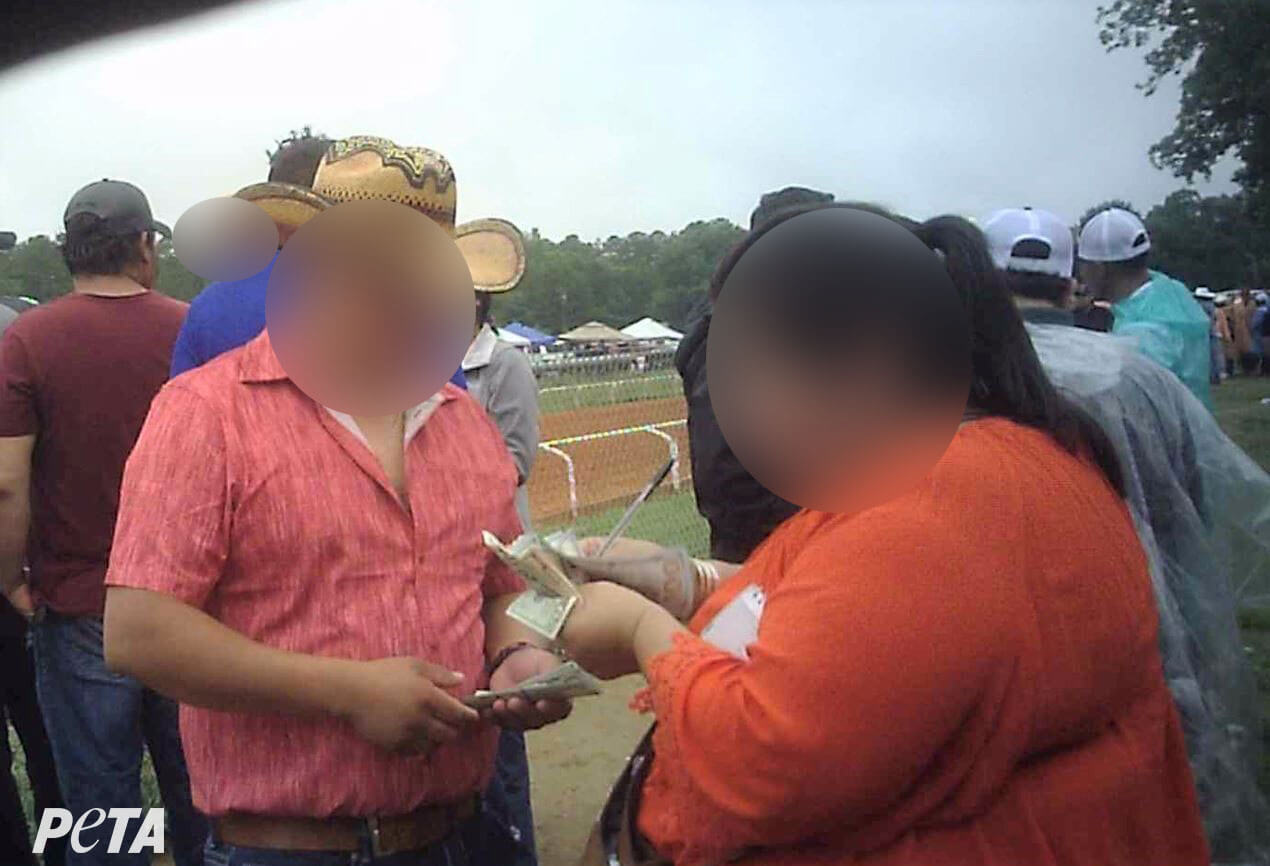
Gambling featured heavily in the operation of these races. In addition to admission fees up to $100, people brazenly wagered what appeared to be hundreds of thousands of dollars. The track announcer stated the “advantages”—match racing’s equivalent of odds. Horses had to win by at least a certain part of the body, for example, the nose, head, girth, backside, or tail (aka picos, cabeza, faja, blanco, and claro) for bettors to win. Multiple bookies circulated among the spectators, collecting wagers in person and via phone. Jockeys, trainers, and owners can often make more money in this lucrative black market racing than they can at mainstream Quarter Horse tracks.
Raced to Death
The doping, whipping, and electroshocking put horses at extreme risk for accidents and fatal injuries. Horses at these “bush tracks” break down frequently, which usually results in death.
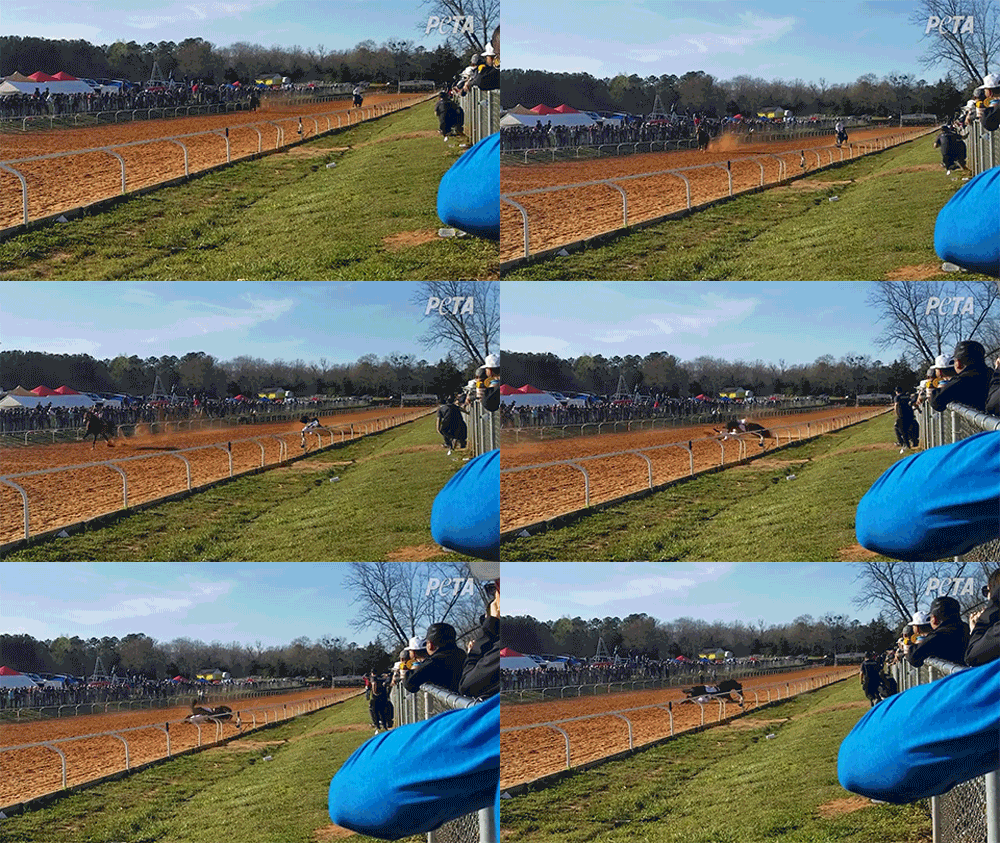
PETA filmed a race in March 2022 in which both participating horses died—one of the horses staggered on a badly broken, dangling leg, before eventually being shot in the head.
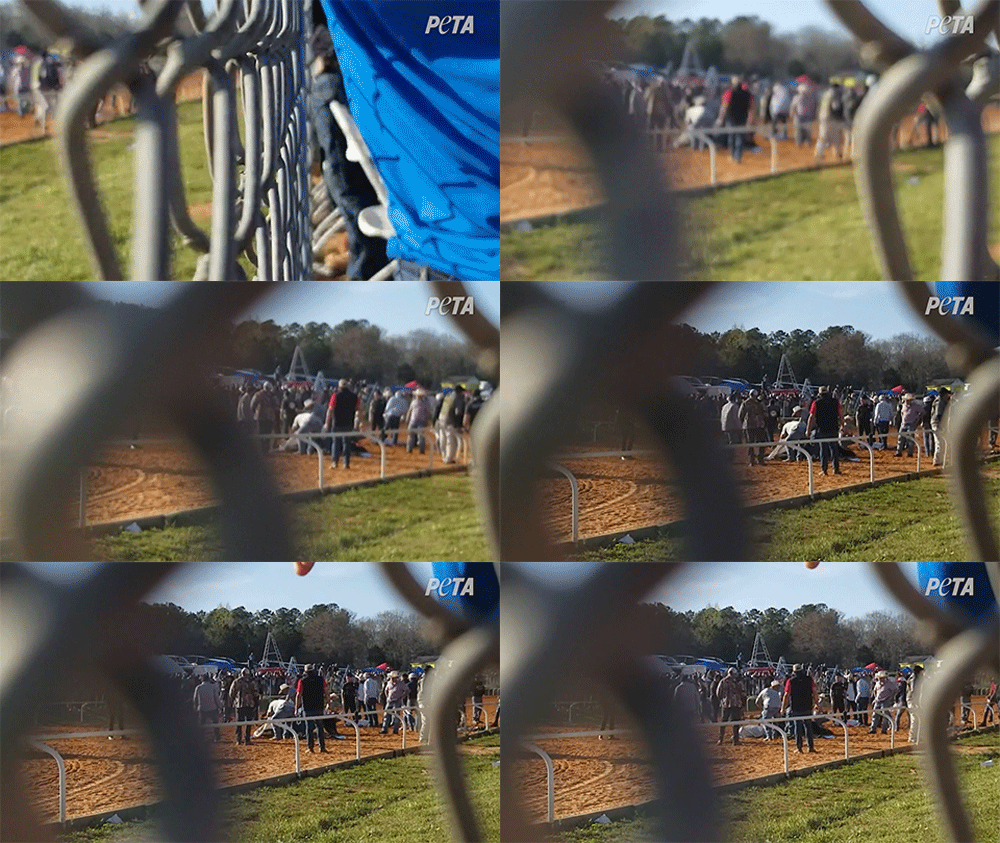
A worker then matter-of-factly dragged the dead horse down the track with a tractor.
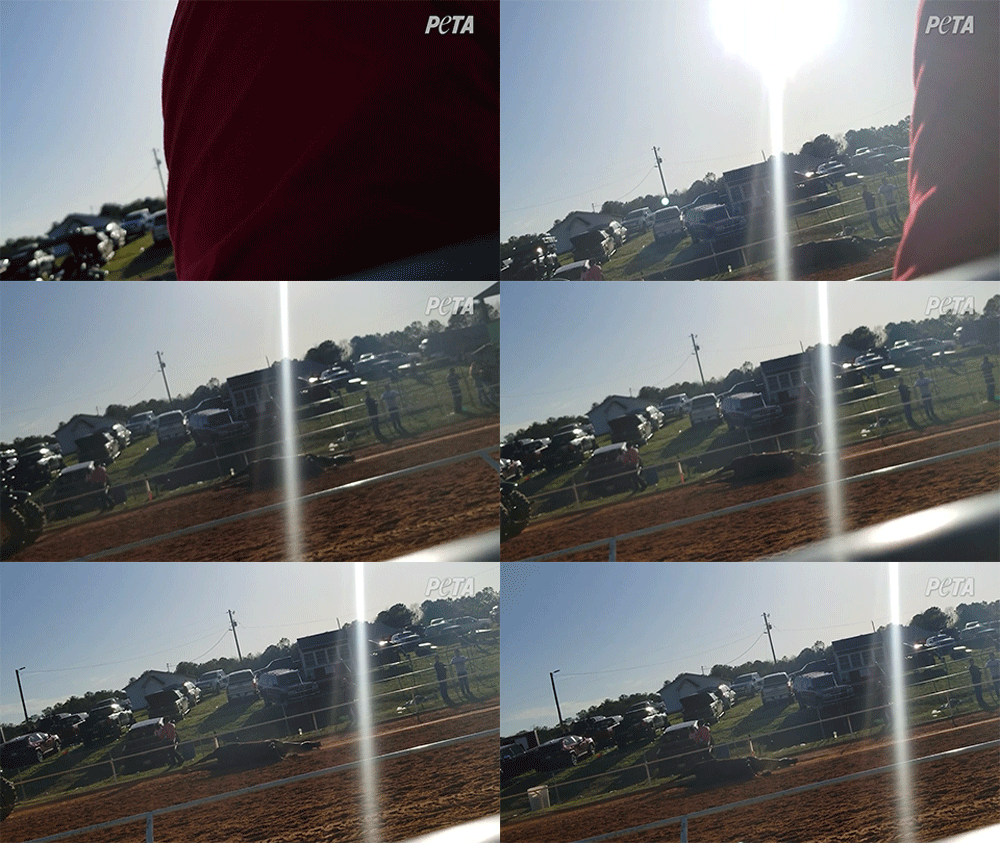
The “winning” horse died of a heart attack.

You Can Help Us Stop This!
PETA has asked local and state law enforcement to investigate and prosecute illegal conduct so that no more horses will be injected with street drugs, be electroshocked, or die in gruesome breakdowns. Meanwhile, please sign our petition urging Gov. Brian Kemp to take immediate action to shut down unregulated tracks operating in Georgia.